Nail Care
Gel vs Acrylic Nail Supplies: What to Stock and Why
Gel systems cure under a lamp, which gives the technician control over working time; acrylic sets chemically, which does not. That single difference drives most of the practical distinctions in durability, speed, removal and what a new technician should stock first.
Neither system is better in the abstract. Acrylic still offers excellent strength for full-set work on clients who are hard on their hands, and gel offers finish quality and a gentler removal.
Here is how they compare across the things that actually affect a service, and a stocking recommendation for each.
Working time is the real difference
With gel, the product stays workable until it goes under the lamp. A technician can shape, refine and correct without pressure, then cure when satisfied. That control is why most newer technicians build faster with gel.
Acrylic begins setting as soon as the monomer meets the polymer, so bead placement and shaping happen against a clock. It is a genuine skill and it takes practice to develop, which is the main reason acrylic feels harder at the start.
For a technician building speed, gel and builder gel are the more forgiving path. For one who has already developed acrylic technique, the speed advantage often reverses.
Durability and client suitability
Acrylic is generally the more rigid, harder-wearing system, which suits clients who work with their hands. In a region built around the automotive trades and manual work, that is a real consideration rather than a theoretical one.
Modern builder and structure gels have narrowed the gap considerably. For most clients they are more than durable enough, and they retain a flexibility that some clients find more comfortable.
The honest framing for a client: acrylic for maximum strength on a full set that takes abuse, gel or builder gel for finish quality, comfort and a gentler removal.
Removal, and why it matters more than people think
Soak-off gel removal is straightforward — acetone, wraps, patience. Hard gels and acrylic both require filing down, which takes longer and carries more risk of damaging the natural nail if rushed.
Removal is where most natural nail damage actually happens, and it is nearly always a technique and time problem rather than a product problem. Filing too aggressively or prying product off causes the thinning and weakness clients then blame on the system.
Stock removal supplies properly for this reason. Acetone, wraps, appropriate bits and lint-free wipes are cheap, and running short encourages exactly the shortcuts that damage nails.
Prep: where retention is actually decided
Lifting is far more often a preparation issue than a product issue. Insufficient dehydration, oils left on the natural nail, or product touching the skin at the cuticle line cause the large majority of retention complaints.
That makes prep the least glamorous and most important part of a stocking list. Dehydrator, pH prep, primer and a proper cuticle routine matter more to your results than which color gel you bought.
New technicians routinely get this backwards — thirty colors and one bottle of dehydrator. The dehydrator is what makes the thirty colors stay on.
Cost per service
Compare on cost per service rather than unit price. A monomer bottle and a builder gel jar are not comparable line items, and neither tells you what a full set actually costs you in product.
Consumables usually matter more than the system itself. Files, bits, wipes, gloves and prep products are consumed on every service regardless of which system you work in, and they price sharply on quantity.
Tools are the other lever. A good nipper holds its edge through far more services than a cheap one, so unit price is a poor guide — cost per service is the number that decides.
What a new technician should stock first
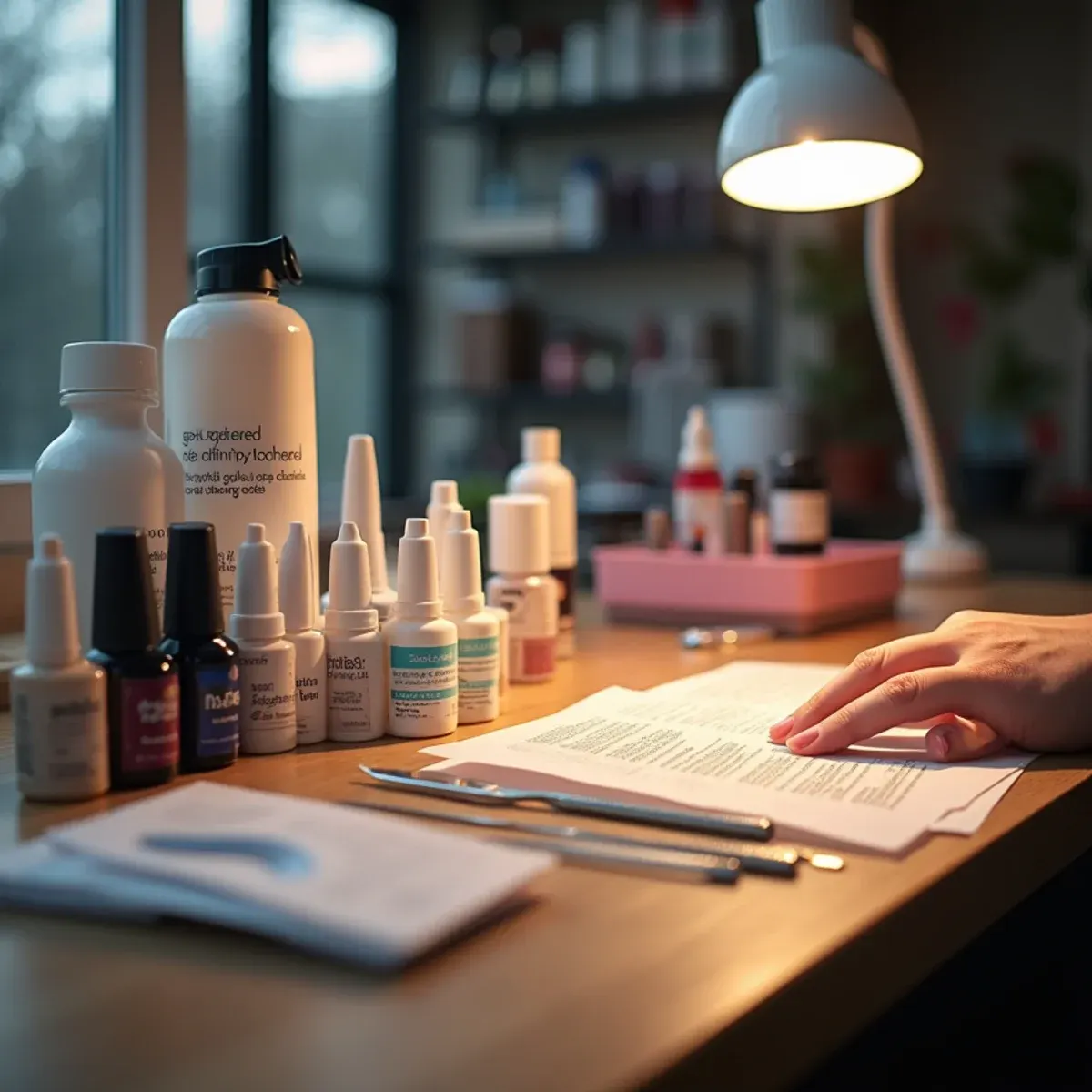
Prep and removal in service-realistic quantity, base and top coat duplicated, one system chosen and stocked properly rather than two stocked thinly, twelve to twenty working colors, files across three grits, and at least two nippers so one can be sanitized while the other is in use.
Duplicating the fast-empty items is the single change that most reduces mid-week emergency runs. Base coat, top coat, dehydrator and acetone are cheap to double and expensive to run out of with four clients booked.
Add the second system later, once the first is genuinely fluent. Splitting a starting budget across gel and acrylic usually produces two incomplete kits rather than one working one.
What each system does to your column
Start with clock time. A gel manicure commonly runs about forty-five minutes end to end, while an acrylic full set commonly runs about ninety. The longer service is not the worse one — it carries a bigger ticket. The question is how many of each fit in a day and at what price, which is a scheduling decision more than a product one.
Then look at rebooking rhythm. Common salon practice is a gel client returning at around two weeks and an acrylic fill at around three. Gel comes back more often at a smaller ticket; acrylic comes back less often at a larger one. A book weighted toward gel needs more bodies cycling through it to hold the same revenue.
Removal is the line that quietly breaks a day. Allowing roughly twenty-five minutes for a soak-off is the usual guidance, and that time has to exist somewhere in the booking. Many technicians include removal for a client rebooking a fresh set and charge for removal-only visits or for another technician’s product. Unbooked removal is the most common reason a schedule runs late by mid-afternoon.
Odor, dust and sharing a space
Acrylic is the loud neighbor in a shared space. Monomer odor carries onto a hair floor, into a lash room or across a retail area, and filing dust travels farther than most people expect. Gel is quieter on both counts but still produces dust at the file and buff stage. If you rent a booth or share a suite, this is a business problem before it is a technical one.
Source capture at the table is the fix that works. Codes for new salons commonly call for extraction at the station itself — the International Mechanical Code figure is 50 CFM per station with the intake no more than twelve inches from where product is applied. In practice that means a table unit with a carbon layer for vapors and a HEPA layer for dust, backed by general ventilation.
Stock for it, because it is a consumable. Replacement filters, dust brushes and a lidded container for saturated wipes get used continuously, and a table unit running on a clogged filter is decoration. Check what your municipality and the state require for your specific build before you commit. On irritation, exposure or allergy questions, this is general information — take those to a qualified professional.
Frequently asked questions
Should a new nail technician start with gel or acrylic?
Most build faster with gel or builder gel, because working time is controlled by the lamp rather than by the setting speed of a monomer. Acrylic is a genuine skill that takes longer to develop.
Which is more durable, gel or acrylic?
Acrylic is generally more rigid and harder-wearing, which suits clients who work with their hands. Modern builder and structure gels have narrowed the gap and are durable enough for most clients.
What actually causes gel lifting?
Preparation, in most cases — insufficient dehydration, oils left on the natural nail, or product touching the skin at the cuticle line. It is rarely the color gel itself.
What should a nail tech stock first?
Prep and removal in service-realistic quantity, duplicated base and top coat, one system stocked properly rather than two thinly, twelve to twenty working colors, three file grits and two nippers.
How long does a gel service take compared to acrylic?
A gel manicure commonly runs about forty-five minutes end to end; an acrylic full set commonly runs about ninety. Fills are shorter than full sets in both systems. Book by the real duration including cure, cleanup and turnaround, not by the time you spend actually applying product.
How often do gel and acrylic clients rebook?
Common practice is about two weeks for gel and about three weeks for acrylic fills. Gel returns more often at a smaller ticket, acrylic less often at a larger one. Both fill a column, but a gel-weighted book needs more clients cycling through it to hold the same revenue.
Should nail removal be booked and charged separately?
Book it separately every time. Allow roughly twenty-five minutes for a soak-off, including wrapping and cleanup. Many technicians include removal for a client rebooking a fresh set and charge for removal-only visits or for another technician’s product. Unbooked removal is the usual reason a schedule falls behind.
What ventilation does a nail station need?
Source capture at the table. The International Mechanical Code figure for new salons is 50 CFM per station with the intake within twelve inches of the application point, plus general ventilation. A table unit with carbon for vapors and HEPA for dust is the practical version. Confirm local requirements before building out.