Retail Strategy
Merchandising Jewelry and Cosmetics Together
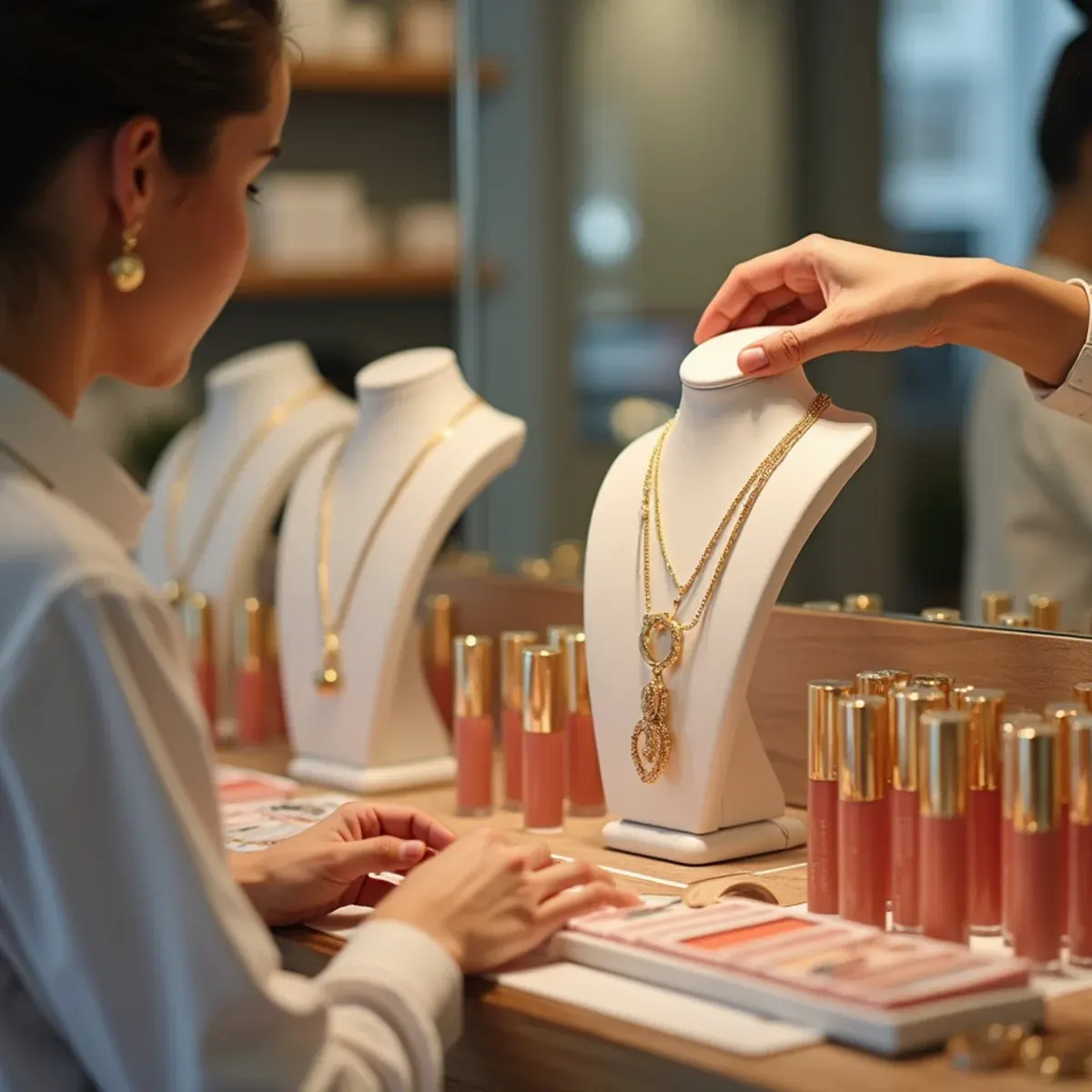
Merchandise jewelry beside the mirror or the counter, group it by metal tone rather than by item type, and display it upright at eye level. Those three decisions do more for jewelry sell-through than the assortment itself.
The reason pairing works at all is that the customer is the same person making the same kind of decision. Choosing a lipstick and choosing earrings are both quick self-expression purchases driven by how something looks against you.
What follows is how to set the display up, and the mistakes that make good stock underperform.
Place it at the decision point
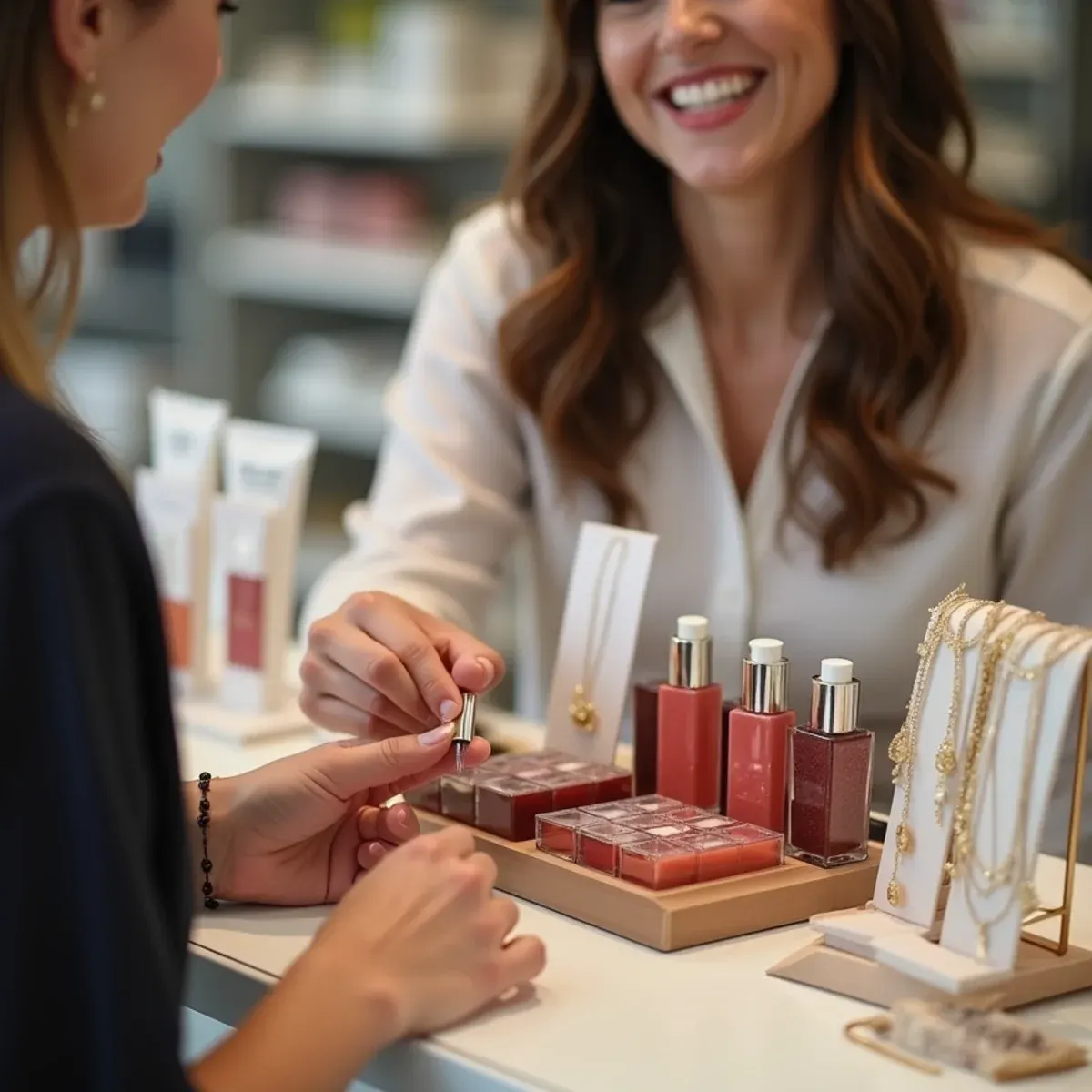
The strongest position for jewelry is wherever a customer is already evaluating how something looks on them — beside a mirror, at the counter, near the makeup testers. A separate accessories zone across the floor performs measurably worse.
The logic is simple: a customer holding a lip color to their face is already in an appearance-evaluation mindset. Earrings within reach at that moment are an easy second decision. The same earrings twenty feet away require starting a new decision from scratch.
For salons, the equivalent position is the reception and waiting area. Clients are seated, unoccupied and already thinking about how they look. That is close to ideal conditions for accessory sales.
Group by metal tone, not by item type
Most retailers organize jewelry into an earring section, a necklace section and a bracelet section. Customers do not shop that way. They shop by the metal they wear.
Someone who wears gold will not buy silver regardless of how good the piece is, so splitting each metal across three separate category displays makes them hunt. Grouping gold hoops, gold chains and gold stacking rings together lets a customer see a complete look at once.
This is also what drives multi-item purchases. A coordinated grouping makes the second and third piece obvious, which is how average transaction value rises without any additional selling effort.
Height changes everything
Jewelry lying flat in a tray reads as clearance. The same pieces on busts and stands at eye level read as a collection. This is the single most common reason a jewelry display underperforms, and it costs nothing to fix.
Use vertical space deliberately: necklace busts and stands at the top, earrings on cards or stands in the middle, rings and small pieces in trays at the bottom where customers naturally look down.
If a display is not moving, raise it before you replace the stock. Retailers routinely change the assortment when the problem was presentation, and then conclude the category does not work for them.
Build the buy around trend-resistant core
Gold and silver hoops, simple studs and everyday chains sell continuously and barely date. These should be the deepest part of the buy, because they carry the display through every gap between trend cycles.
A trend layer sits on top, bought deliberately shallow. Trend jewelry is high-reward and short-lived, and depth on it converts directly into markdown.
Stacking and layering sets deserve specific attention because they raise basket size without asking the customer to make a second decision. A layered necklace set is one choice that sells three pieces.
Pairing that actually makes sense
Coordinate by finish and mood rather than by literal color matching. Warm gold beside warm-toned lip and cheek products, cool silver beside cooler shades — the display should read as coherent without being heavy-handed.
Seasonal pairing works well too. Lighter, brighter jewelry alongside summer complexion products; heavier pieces and richer lip shades together in autumn. This gives you a natural reason to refresh the display without buying new fixtures.
For gifting periods, pair a jewelry piece with a body care or lip product as a ready-made set. Cross-category sets are the single most effective way to lift average transaction value in a small store, and they are only practical when both categories come from a supplier you already order from.
Keeping stock in condition
Plated jewelry tarnishes and dulls, and the main causes are humidity and light. Backup stock should be in sealed bags, in a dry area, away from direct sunlight.
Michigan basements and back rooms are a genuine risk here — many run humid enough through summer to dull plating before a piece ever reaches the display. A dehumidifier in a storage area is a cheap fix for a real loss.
Rotate display pieces periodically. The item sitting under a spotlight for six months is the one that will look tired next to a fresh replacement, and a customer will notice even if you have stopped seeing it.
Light decides how the metal reads
Gold looks its best under warm light, roughly 2700K to 3000K, which pulls the yellow forward. Silver and steel tones need something more neutral, around 3500K to 4000K, or they go flat and gray. Push too cool on gold and it reads pale; push too warm on silver and it looks dingy. The same tray of stock can look like two different price points under two different bulbs.
Cosmetics pull the other way. Shade matching needs neutral to daylight light with strong color rendering, so a foundation or lip color looks the same at your counter as it does outside. Ask for CRI 90 or above on anything lighting a testing area. Set that neutral, high color rendering base across the whole counter, then add a warm accent spot over the gold grouping specifically.
Direction matters as much as color. Flat overhead light kills sparkle, while a narrow accent beam aimed across polished metal is what catches an eye from across the room. Test before you commit. Put a piece in the exact spot you plan to display it and look at it under your own fixtures, because it will never look the way it did in a supplier photo.
Open display, shrink and small high-turn items
Fashion jewelry has the worst value-to-size ratio in a beauty store. It is small, it comes off a card in a second, and it can leave the building on a wrist. Locked cases stop that, but they also stop sales. A customer who has to find staff to open a locked case for an inexpensive pair of earrings usually just leaves, and at low price points that friction costs more than the shrink does.
Split the decision by price point. Keep the everyday core open and reachable, and reserve the case for the few higher-ticket pieces. Then use position as security. A display inside the sightline of the register is both the strongest selling position and the hardest place to work unobserved, which is one more argument for the counter over a far corner of the floor.
Count it on a short cycle. Small items go missing one at a time, and a card off a peg stays invisible until an annual count tells you something you can no longer act on. A quick weekly count by peg or card takes minutes and does double duty — it flags loss early, and the same numbers show you which groupings are actually selling.
Frequently asked questions
Where should jewelry be placed in a beauty store?
At the decision point — beside a mirror, at the counter, or near makeup testers. Customers evaluating how something looks on them are the most receptive audience for an accessory.
Should jewelry be grouped by type or by metal tone?
By metal tone. Customers shop by the metal they wear, so grouping gold pieces together and silver pieces together lets them see a complete look instead of hunting across three category displays.
Why is my jewelry display not selling?
Most often height. Pieces lying flat in trays read as clearance; the same pieces upright on stands at eye level read as a collection. Raise the display before changing the stock.
How do I stop plated jewelry tarnishing in storage?
Keep backup stock in sealed bags in a dry area away from sunlight. Humid basements and back rooms — common in Michigan through summer — dull plating before pieces reach the display.
What lighting is best for a jewelry display in a beauty store?
Neutral, high color rendering light as the base — CRI 90 or above — so cosmetics shade matching stays accurate at the same counter. Then add a warm accent spot, around 2700K to 3000K, over the gold grouping only. Gold goes pale under cool light and silver goes dull under warm light.
Should fashion jewelry be kept in a locked case?
Usually not at low price points. A locked case adds friction, and a customer who has to wait for staff to open it for an inexpensive piece often walks instead. Keep the everyday core open and inside the register sightline, and reserve the case for the few higher-ticket pieces.
Should customers be allowed to try on earrings?
Not pierced styles. The FDA treats earrings as body-piercing products, which is why most retailers refuse returns on worn pairs. Offer a mirror so customers can hold pieces to the ear, and limit try-on to clip-on or non-pierced styles. If a customer raises a skin reaction, point them to a qualified professional.
How often should I count a fashion jewelry display?
Weekly, by peg or by card. Small items disappear one at a time, so an annual count reports losses long after you could have acted on them. A short weekly count takes minutes and doubles as a sell-through read, showing which metal groupings move and which sit.