Product Knowledge
Cosmetics Shelf Life and Expiration: A Complete Guide
Most cosmetics carry a period-after-opening symbol rather than an expiry date: a small open jar marked 6M, 12M or 24M, indicating how many months the product remains good once opened. Unopened, most sealed cosmetics keep considerably longer.
The practical shelf life varies enormously by category. Mascara is measured in months, pressed powders in years, and active skincare somewhere between depending on the ingredient and the packaging.
This guide covers what the symbols mean, realistic timelines by category, and the physical signs that a product has degraded regardless of what the label says.
What the PAO symbol actually tells you
The period-after-opening symbol is an open jar icon with a number and the letter M. 12M means twelve months of expected stability after first opening, under normal storage conditions.
It is not a hard cutoff, and it is not a safety guarantee either. It reflects the manufacturer’s testing of how long the product remains stable and adequately preserved once air, fingers and bathroom humidity have been introduced.
Products that never come into contact with a finger or an applicator — airless pumps, for instance — often outlast their stated PAO comfortably, while a jar product dipped into daily may not reach it.
Realistic shelf life by category
Mascara and liquid eyeliner are the shortest, typically three to six months after opening. They are applied close to the eye, repeatedly re-introduce the applicator into the tube, and are the most common source of product-related eye irritation.
Liquid foundations, concealers and cream products generally run six to twelve months. Pressed powders, shadows, blushes and bronzers are far more stable — often two to three years — because they contain little or no water for microbes to grow in.
Lipsticks and balms usually manage one to two years. Nail polish is variable and fails by separating or thickening rather than by spoiling. Skincare with active ingredients is the category where the number on the label matters least, because potency declines before anything visible happens.
Why active skincare is a special case
Vitamin C, retinoids, peptides and many botanical actives degrade over time regardless of preservation. A vitamin C serum that has oxidized is not unsafe — it has simply stopped doing the thing you bought it for.
Oxidation is often visible. A vitamin C serum that has turned deep orange or brown has degraded substantially. Retinoid products that have been stored warm or in clear packaging lose potency without any color change at all, which is harder to catch.
This is why packaging matters as much as formulation for actives. Opaque, airless containers protect potency meaningfully, and paying less for the same active in a clear jar frequently means paying for a product that will not perform for its stated life.
The signs a product has gone, whatever the date says
Separation that does not resolve with shaking, a change in color, or a change in smell are the three reliable indicators. Any emulsion that has split permanently has failed structurally.
Texture changes matter too. Foundations that have become gritty, creams that have gone watery, and pressed powders that have developed a hard glazed film on the surface have all changed in ways that affect performance.
Smell is the most sensitive early warning. Cosmetics with oils in them go rancid, and the smell arrives well before anything visible does. If a product smells like old oil, it is finished regardless of its date.
Managing shelf life as a retailer
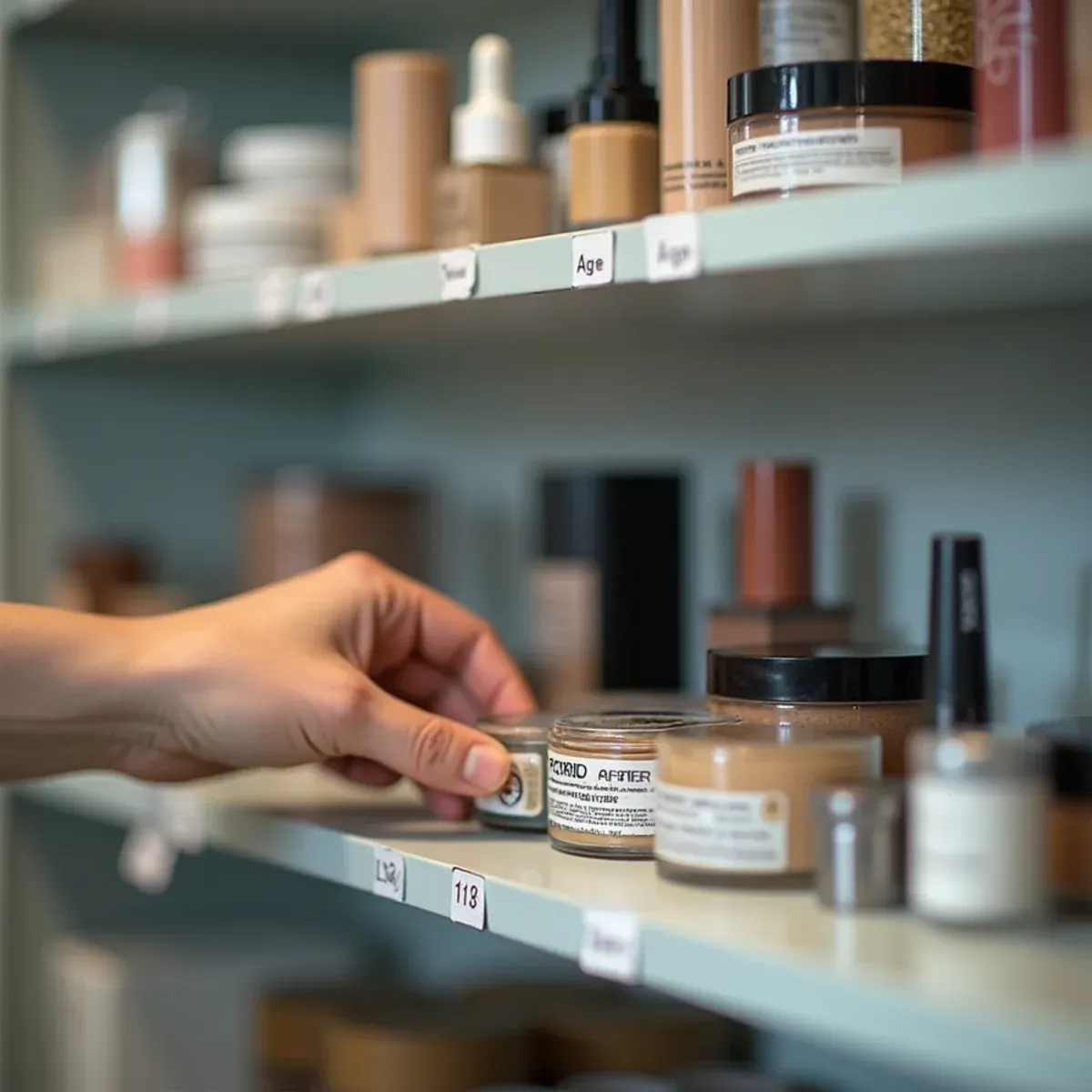
Rotate stock properly and date your receipts. First in, first out sounds obvious and is routinely ignored on shelves where new stock is simply placed in front of old.
Buy actives shallow and often. This is the single most important stock rule for skincare — a deep buy at a good unit price becomes expensive when a third of it is no longer effective by the time it sells.
Watch storage conditions in your own premises. A back room that gets warm in summer, or a display in direct sunlight, will age products faster than any label anticipated. Both are common and both are fixable.
PAO symbol, batch code, expiration date: three different things
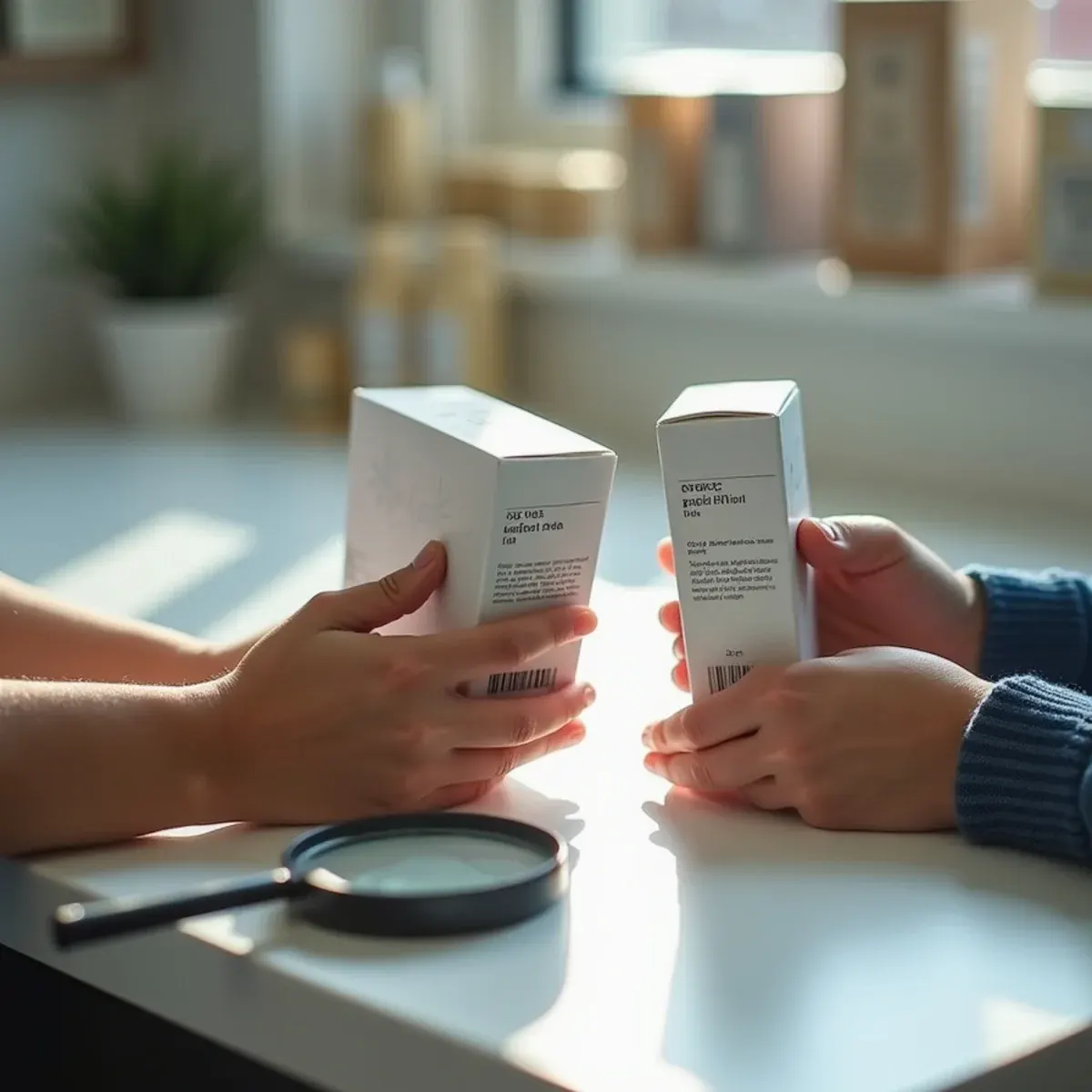
Three markings get confused. The period-after-opening symbol counts months from first opening. A batch or lot code is a factory identifier that records which production run a unit came from, and usually encodes the manufacture date. A printed expiration date is a fixed calendar limit set by the manufacturer. Only the third is a date in the ordinary sense, and on cosmetics sold in the US it is the least common of the three.
Batch codes are printed or embossed somewhere inconspicuous: the base of a bottle, the crimp of a tube, a carton flap, the edge of a cap. Each manufacturer uses its own encoding scheme, so the same string means different things across brands. Third-party decoder sites cover many brands, but they are unofficial and coverage varies. The authoritative answer comes from the brand or distributor, who can read their own code.
US law does not require cosmetics to carry an expiration date. Shelf life is treated as the manufacturer’s responsibility, which is why a moisturizer often carries only a PAO symbol and a lot code. Products regulated as over-the-counter drugs are different: sunscreens, acne products and antiperspirants make drug claims, must be stability tested, and carry a printed expiration date on the label.
How long unopened stock really lasts
Sealed cosmetics commonly hold up for roughly two to three years from manufacture, with water-containing emulsions at the shorter end and anhydrous formulas at the longer. That clock starts the day the product was made, not the day it reached you. A unit that spent two years in a distributor’s warehouse arrives with most of its unopened life already spent, however new the carton looks.
Water is what decides the difference. Any formula containing water needs a preservative system to hold back bacteria, yeast and mold, and that system has a finite capacity rather than an unlimited one. Every finger, damp applicator and humid shelf spends some of it. Anhydrous formulas — balms, oils and sticks — have far less to defend, and they tend to age by going rancid rather than by growing anything.
So ask for the manufacture date, not just the delivery date. A supplier who can tell you when a lot was produced is giving you the number that actually matters, particularly on water-based lines and anything with an active in it. A low unit price on stock produced two years ago is not a low price — it is a shorter selling window dressed up as a discount.
Frequently asked questions
What does 12M mean on a cosmetic package?
It is the period-after-opening symbol: the product is expected to remain stable for twelve months after first opening, under normal storage. It is not a hard cutoff or a safety guarantee.
How long does mascara last?
Typically three to six months after opening — the shortest of any cosmetic category, because the applicator is repeatedly reintroduced into the tube and the product is used close to the eye.
How can I tell if a cosmetic has expired?
Permanent separation, a change in color, or a change in smell. Smell is the earliest warning, because oils go rancid before anything visible happens.
Should retailers buy active skincare in bulk?
Generally no. Vitamin C, retinoids and peptides lose potency on a real timeline, so a deep buy at a good unit price becomes expensive when part of it is no longer effective by the time it sells.
Why do most cosmetics sold in the US have no expiration date?
US law does not require an expiration date on cosmetics — shelf life is treated as the manufacturer’s responsibility, and most brands print a period-after-opening symbol and a lot code instead. Products regulated as over-the-counter drugs, including sunscreens, acne products and antiperspirants, must carry a printed expiration date.
How do I find out when a cosmetic was manufactured?
Look for the batch or lot code, usually on the base of the bottle, the crimp of a tube, a cap edge or a carton flap. Each brand encodes it differently, so the code alone will not read as a date. Third-party decoder sites cover many brands unofficially; the brand or distributor can confirm it properly.
How long do unopened cosmetics last?
Roughly two to three years from the manufacture date for most sealed products, with water-containing emulsions at the shorter end and anhydrous formulas at the longer. The period-after-opening clock only starts when the seal is broken, so a sealed unit that has sat in a warehouse for two years has already used most of its life.
Why do water-based products spoil faster than oil-based ones?
Because microbes need water. Any formula containing water relies on a preservative system to hold back bacteria, yeast and mold, and that system is used up gradually by fingers, damp applicators and humid storage. Anhydrous products such as balms, oils and sticks have far less to defend and usually fail by going rancid instead.